A brilliant white smile is frequently linked to confidence, beauty, and proper dental care. One of the most common cosmetic dentistry procedures nowadays is teeth whitening, which helps people improve their smiles by getting rid of discolouration and stains. Given the wide range of teeth-whitening possibilities available, including at-home and professional treatments, it’s critical to comprehend the advantages, dangers, and recommended procedures.
Reasons for Discoloration of the Teeth
Knowing the causes of tooth discoloration is crucial before thinking about teeth whitening. Teeth discoloration and yellowing are caused by a number of circumstances, including:
- Food and Drink: Over time, the pigments in coffee, tea, red wine, and dark-colored drinks can discolor tooth enamel.
- Smoking and Tobacco Use: Tobacco’s tar and nicotine produce stubborn, deep stains.
- Bad Oral Hygiene: Insufficient brushing and flossing cause tartar and plaque to accumulate, which discolors teeth.
- Aging: The yellowish dentin underneath becomes more apparent when enamel deteriorates with age.
- Medication: Tooth discolouration can result from taking some antibiotics, antihistamines, and high blood pressure drugs.
- Genetics: Due to hereditary causes, some people naturally have whiter teeth than others.
Options for Professional Teeth Whitening
The most dependable results for people looking for quick and efficient teeth whitening are from expert procedures carried out by a dentist at https://ardenmillfamilydentistry.com. The following are a few of the most popular professional whitening techniques:
1. Whitening in the Office
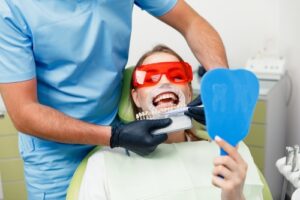
Dentists utilize high-concentration bleaching substances in conjunction with specialist tools like lasers or LED lights to speed up the whitening procedure. In a single session, the procedure can lighten teeth by several shades and usually takes an hour.
2. Whitening Kits to Take Home
Dentists give their patients professional-grade whitening gel and specially designed trays to use at home. When used regularly, these kits provide progressive whitening over a few weeks with outcomes that are on par with in-office procedures.
Alternatives to Over-the-Counter Whitening Products
Because at-home whitening products are more convenient and reasonably priced, many people choose to use them. Common over-the-counter choices include:
1. Whitening Toothpaste
Whitening toothpaste helps eliminate surface stains by containing small amounts of bleaching chemicals and mild abrasives. Although they don’t significantly alter tooth color, they can help keep teeth white following a professional procedure.
2. Whitening Strips
These thin, flexible strips coated with a whitening gel based on peroxide are applied to the teeth for a specified amount of time, usually 30 minutes a day for two weeks. Although some users may experience irritation, they provide noticeable whitening results.
3. Pens and Gels for Whitening
Minor stains can be removed using whitening gels applied directly to teeth with a little brush or pen. Although these are simple to apply, they might not produce results as quickly as professional treatments.
4. Products Using Activated Charcoal
By absorbing stains, charcoal-based toothpaste and powders are said to whiten teeth. Their efficacy is still up for question, though, and overuse can erode enamel.
Natural Ways to Whiten Your Teeth
Here are some natural teeth-whitening techniques for people searching for chemical-free alternatives:
- Hydrogen Peroxide and Baking Soda: A paste made with these ingredients can remove surface stains, but it should only be applied sparingly to avoid eroding enamel.
- Oil Pulling: Swishing coconut oil in the mouth for ten to fifteen minutes is said to lower plaque and bacteria, enhancing dental health in general.
- Consuming Crunchy Fruits and Vegetables: Celery, carrots, and apples all serve as natural teeth-cleaning abrasives.
Possible Hazards and Adverse Reactions
Although teeth whitening is usually harmless, using whitening solutions excessively can result in:
- Tooth Sensitivity: Whitening products may momentarily increase a tooth’s sensitivity to heat or cold.
- Gum Irritation: If bleaching agents come into contact with gum tissue, they may produce minor irritation.
- Uneven Whitening: Crowns and fillings that are already in place do not whiten as naturally as natural teeth, giving the appearance of unevenness.
- Damage to Enamel: Excessive use of teeth-whitening solutions can erode enamel, raising the risk of decay and cavities.
Advice on Keeping Your Smile White
Use these easy pointers to extend the results of teeth whitening:
- Brush and floss regularly to avoid plaque accumulation.
- Steer clear of foods and beverages that might discolor teeth, or use a straw to reduce tooth contact.
- Reduce tobacco use and quit smoking.
- Visit the dentist for routine professional cleanings and examinations.
- As advised by your dentist, use touch-up procedures or whitening toothpaste.
Conclusion
Whitening your teeth is a great approach to improve your smile and increase your self-esteem. People can select a treatment that best fits their requirements and lifestyle from a range of possibilities, including natural therapies and expert treatments. To guarantee safe and long-lasting effects, it’s crucial to use whitening products sensibly and speak with a dentist. By practicing basic oral hygiene and making thoughtful food choices, you can maintain a radiant, healthy smile for many years to come.
