The specialty area of dentistry known as orthodontics is dedicated to identifying, preventing, and treating misaligned jaws and teeth. It is essential for maintaining good oral health and general well-being, assisting people in achieving both a lovely smile and better tooth function. Orthodontic technology has improved over time, making procedures more effective, pleasant, and aesthetically beautiful.
The Value of Orthodontic Treatment
Orthodontic treatment is often thought of as having cosmetic advantages, but its importance extends beyond looks. By lowering the incidence of gum disease, tooth decay, and other dental issues, properly aligned teeth improve oral health. Uneven tooth wear, chewing difficulties, and even speech issues can result from misaligned teeth. Additionally, addressing biting problems might help avoid conditions like temporomandibular joint (TMJ) dysfunction and jaw pain.
Typical Orthodontic Problems
Orthodontic treatments can help with a number of dental issues, such as:
- Excessive overlap between the upper and lower front teeth is known as an overbite.
- When the lower teeth protrude past the upper teeth, it is called an underbite.
- When some upper teeth are positioned inside rather than outside of lower teeth, this is known as a crossbite.
- When biting, an open bite occurs when the top and lower front teeth are separated.
- When there is not enough room for every tooth to fit correctly, this is known as crowding.
- When there are spaces between teeth as a result of tiny or missing teeth, this is known as spacing.
Orthodontic Treatment Types
The severity of the problem and the patient’s preferences determine the course of orthodontic therapy. Among the most popular therapies are:
1. Conventional Braces
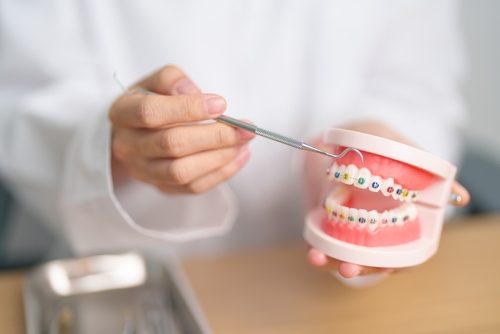
The most popular orthodontic therapy is metal braces. To gradually move teeth into the appropriate position, they are made up of metal brackets that are affixed to the teeth and connected by wires that are frequently adjusted. Even while they work well, they are frequently less popular for aesthetic reasons.
2. Braces made of ceramic
Ceramic braces use tooth-colored or clear brackets, which make them less obvious than regular braces. They work similarly to metal braces, although they look more understated.
3. Braces for Lingual
Since these braces are positioned on the inside of the teeth, they are essentially undetectable from the outside. Although they are tailored to each patient, their location may make them more difficult to get used to.
4. Invisalign Clear Aligners
A common contemporary substitute for braces are clear aligners. Teeth are gradually moved into position by these specially designed, detachable trays. Because they can be removed for meals and dental hygiene, they are pleasant, convenient, and almost undetectable. Wearing them for the suggested 20 to 22 hours a day, however, calls for self-control.
5. Keepers
Retainers are used to keep the teeth in their new place following orthodontic treatment. They aid in keeping teeth from moving back to their original places and can be repaired or removed.
Whitening of teeth
A common cosmetic dentistry operation, teeth whitening improves the brightness of teeth and gets rid of stains from smoking, food, drink, and aging. Professional whitening procedures can be carried out at a dentist facility or at home with over-the-counter whitening toothpaste, strips, and trays. Because professional treatments employ stronger bleaching agents, the results are usually speedier and more obvious. The results of teeth whitening can be extended by practicing good dental care and avoiding foods that discolor teeth.
The Procedure for Orthodontic Treatment
Several steps are involved in orthodontic treatment:
During the initial consultation, the orthodontist uses digital scans, photographs, and X-rays to assess the patient’s teeth, bite, and jaw alignment.
- Treatment Planning: The orthodontist suggests the best course of action based on the diagnosis.
- Appliance Placement: Care instructions are given together with the placement of braces or aligners.
- Monitoring and Adjustments: Progress and required adjustments are guaranteed by routine examinations.
- Phase of Retention: Retainers are employed to sustain the outcomes following active treatment.
Advantages of Orthodontic Therapy
There are many advantages to orthodontic treatment, including:
- Better Oral Health: Because straight teeth are simpler to maintain, there is a lower chance of gum disease and cavities.
- Improved Aesthetic Appeal: Self-esteem and confidence are increased by a grin that is properly positioned.
- Improved Functionality: Resolving biting problems enhances jaw alignment, speaking, and chewing.
- Future Problem Prevention: More serious dental issues later in life can be avoided with early orthodontic treatments.
In conclusion
Orthodontics is crucial for preserving oral health and general wellbeing, not just for getting the ideal smile. Nowadays, people of all ages can benefit from orthodontic care thanks to the variety of treatment options accessible. The first step to a happier, more self-assured smile is to speak with a skilled orthodontist.
